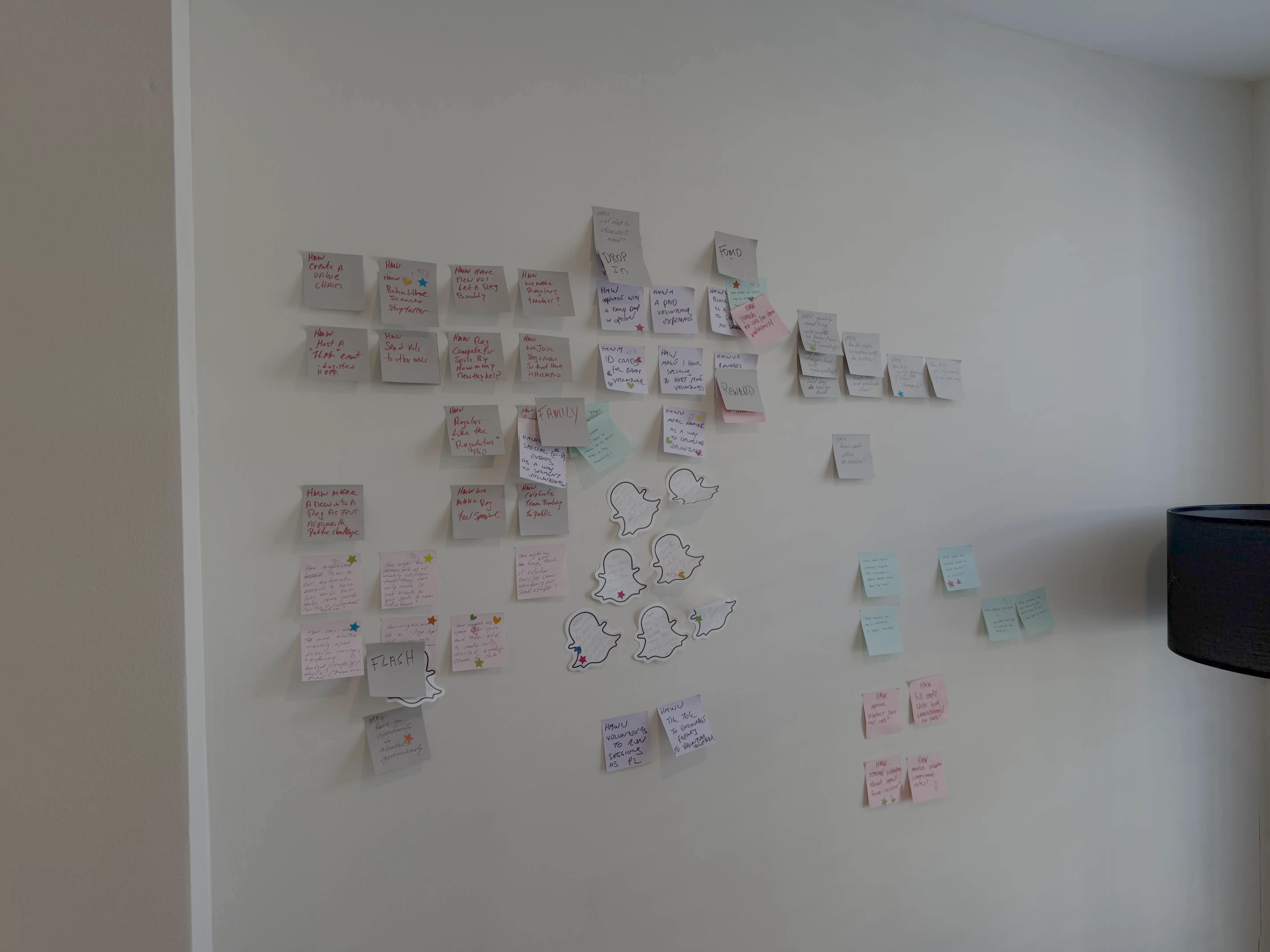
OBKLA

Improving volunteer management experiences.

obkla preview

Role

UX Reseacher,
Product Designer

Timeline

Feb. 2026 - Present

Team

3 Designers
+ Stakeholders

Tools/Skills

UX Research,
Service Design,
Journey Mapping,
Miro,
Figma

Overview

As OBKLA's volunteer operations continued to grow, coordinators encountered recurring challenges managing events, volunteer communication, and participant data through their volunteer management platform. This research focused on understanding these operational challenges and identifying opportunities to improve both administrative workflows and the volunteer experience.

My Role & Contribution

As a Product Designer and UX Researcher, I collaborated with the Common Fabric team and OBKLA stakeholders to investigate challenges within their volunteer management system. I analyzed existing workflows, mapped the volunteer experience, and synthesized research findings into opportunities for improving volunteer coordination and operations.

The Problem

With OBKLA's volunteer operations scaled to over 24,000 volunteers, coordinators became increasingly dependent on their volunteer management platform to manage events, communication, and participant data. However, recurring system limitations created additional manual work and inconsistent experiences throughout registration, communication, and event participation.

The Challenge

Although many issues stemmed from a third-party volunteer management platform, OBKLA had limited control over the system itself. The challenge became understanding where improvements could have the greatest impact despite existing platform constraints.

How might we improve the volunteer management experience for administrators and volunteers by reducing friction across communication, coordination, and day-to-day workflows?

Research & Discovery

To better understand the volunteer management experience, a combination of stakeholder research, workflow analysis, and firsthand observation was used to identify pain points affecting both administrators and volunteers.

Understanding Operational Challenges

We began by working with OBKLA stakeholders to understand their volunteer coordination workflows. Through these conversations, we learned how administrators relied on their volunteer management system to organize events, communicate with volunteers, and maintain accurate records. This helped uncover recurring challenges that created operational friction and manual work.
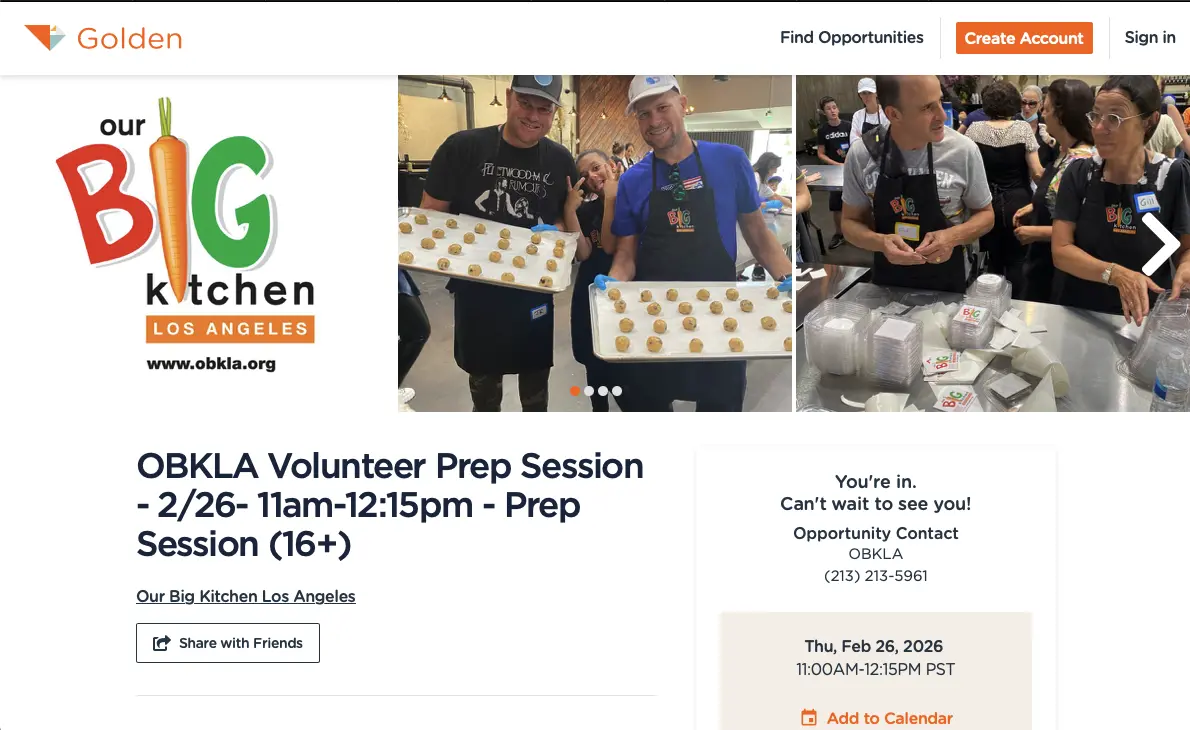
obkla vms

Third-party VMS used by OBKLA to support volunteer registration and event coordination.

Experiencing the Volunteer Journey

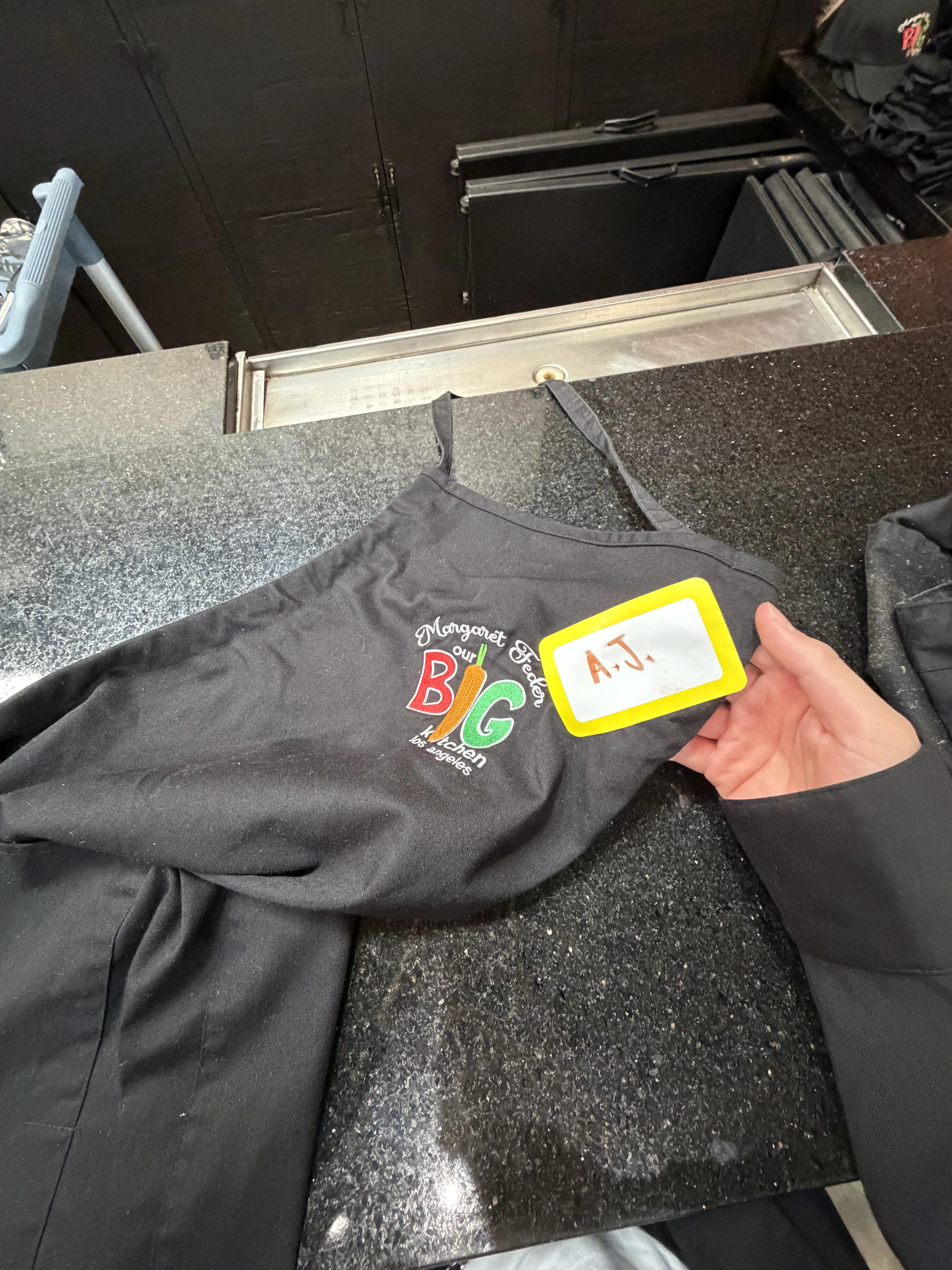
From attending an OBKLA volunteer session we observed interactions between volunteers, coordinators, and the systems supporting the experience. This firsthand observation revealed gaps between intended workflows and the actual volunteer experience.
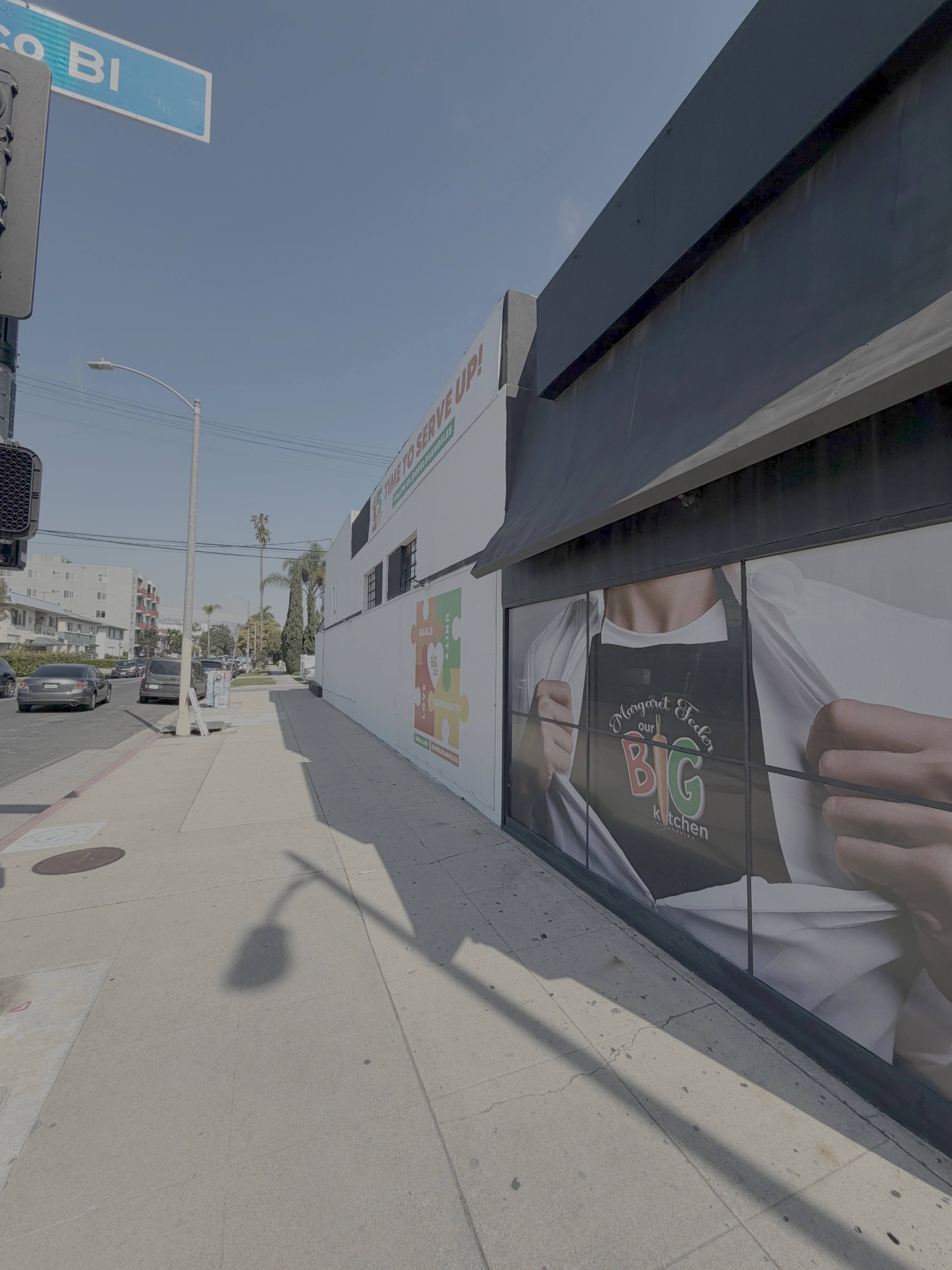
obkla front

Our Big Kitchen Los Angeles.

obkla

Official OBKLA apron from a volunteer session.

Mapping the Current Experience

Using stakeholder insights and firsthand observations, I created a current-state journey map to visualize key volunteer touchpoints and identify friction across registration, communication, event participation, and follow-up.
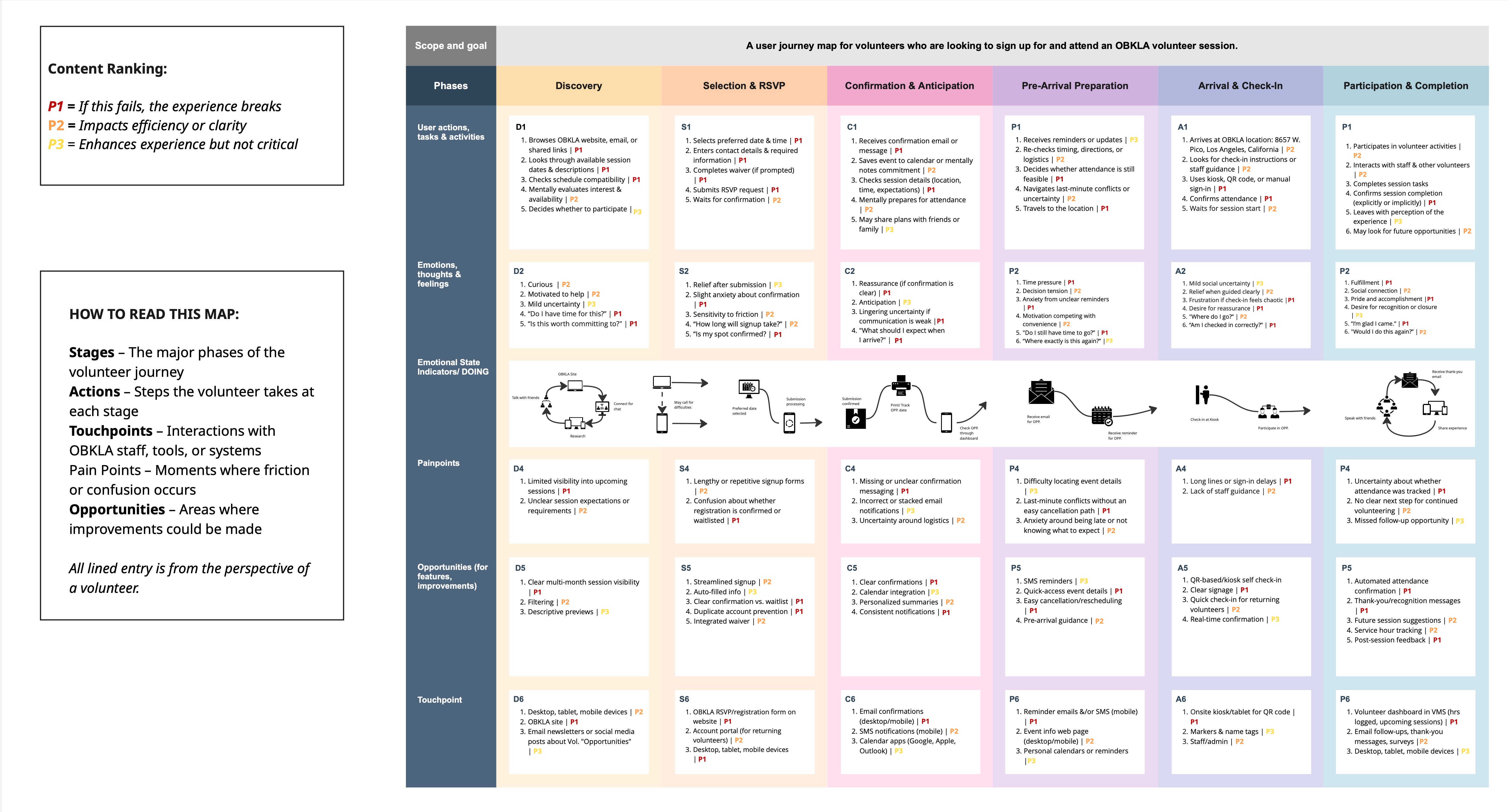
journey map

Current-state journey map illustrating the volunteer experience from registration through event participation.

Visualizing the Service Ecosystem

Building on the journey map, I developed a service blueprint to understand the relationship between volunteer actions, administrative processes, communication channels, and supporting systems. This helped identify where breakdowns occurred across the broader volunteer experience.
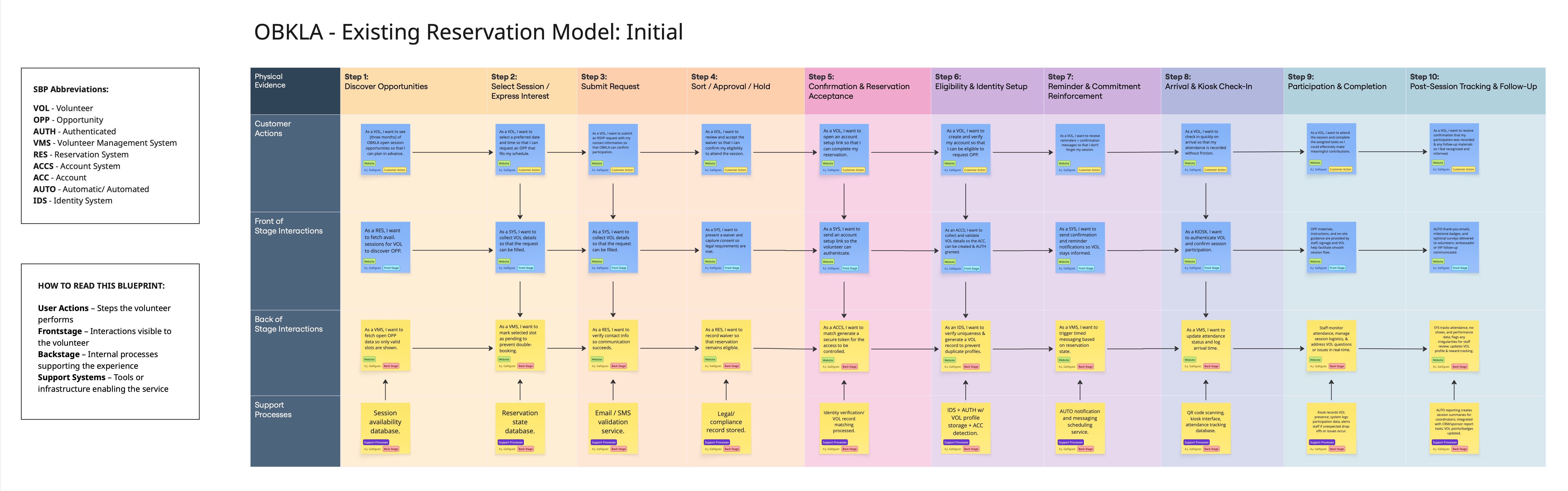
blueprint

Service blueprint illustrating volunteer actions, frontstage interactions, backstage processes, and supporting systems.

Key Takeaways

Volunteer Management Is an Operational System.

Volunteer coordination extends beyond scheduling. Factors such as communication, data management, workflows, and human relationships all contribute to the volunteer experience.

Small Frictions Compound at Scale.

Individual issues such as duplicate profiles, unclear notifications, or registration confusion become significant operational challenges when supporting thousands of volunteers.

Research Helps Identify the Right Problems Before Building Solutions.

Before designing new technology, understanding existing workflows and challenges helps ensure future solutions address real organizational needs.

Opportunities: Exploring an AI-Native VMS Platform

Reduce Administrative Workload

Volunteer coordinators spend significant time managing repetitive tasks, resolving registration issues, and maintaining volunteer information. An AI-powered VMS could automate routine workflows and help coordinators focus on higher-value community engagement.

Improve Volunteer Communication

Communication gaps and inconsistent notifications created confusion throughout the volunteer journey. An AI-powered VMS could provide clearer updates, personalized support, and more responsive communication between organizations and volunteers.

Create Smarter Volunteer Management

Duplicate profiles, fragmented data, and limited visibility into volunteer activity created operational challenges. An AI-powered VMS could improve data accuracy, surface insights, and help organizations make more informed decisions.

Next Steps

Building on the findings from OBKLA, future research will validate these patterns with volunteer coordinators, nonprofit organizations, and industry practitioners to refine opportunities for an AI-powered volunteer management system.